 Tago
TagoFounder · Product design · Product management · Mobile
Building a live social platform from the ground up.
Tago is a live mobile social, video, communication and community platform. I founded it, designed it and built the frontend — from product requirements through to release.
Role
Founder · Product Designer/Manager
Period
June 2025 – Present
Surface
Mobile · React Native
01 — The problem
Before designing the solution, figure out what hurts.
Social products fragment the things people actually want to do together. Messaging lives in one place, voice and video in another, and community in a third. Tago was created to bring live communication and community into a single mobile product, so that talking, watching and belonging happen in the same place rather than across four apps.
Same product. Different humans.
02 — The product
One product, four connected surfaces.
Messaging
- Direct conversation
- Media sharing
- Presence
Group chat
- Multi-person threads
- Roles
- Moderation surface
Voice / Video
- Live rooms
- Real-time calls
- Session states
Community
- Discovery
- Membership
- Shared spaces
Moderation
- Open-source tooling
- AI-assisted review
- Safety at scale
Infrastructure
- Supabase backend
- Cloudflare Workers
- Web builds
03 — The experience
From flow to shipped screen.
- 01User flow
- 02Wireframe
- 03High-fidelity UI
- 04React Native implementation
- 05Release
Find your people
01 — Onboarding
One promise per screen.
Nearby
02 — Discovery
03 — Room detail
Navigation study — one bar, three states
States decided before pixels.
Schematics above; the shipped screens follow.
03b — Shipped screens
The product, as people actually see it.
Four surfaces from the live build: going live, discovering circles, the story feed and the creator profile. Same decisions as the flows above — rendered, shipped and in people's hands.
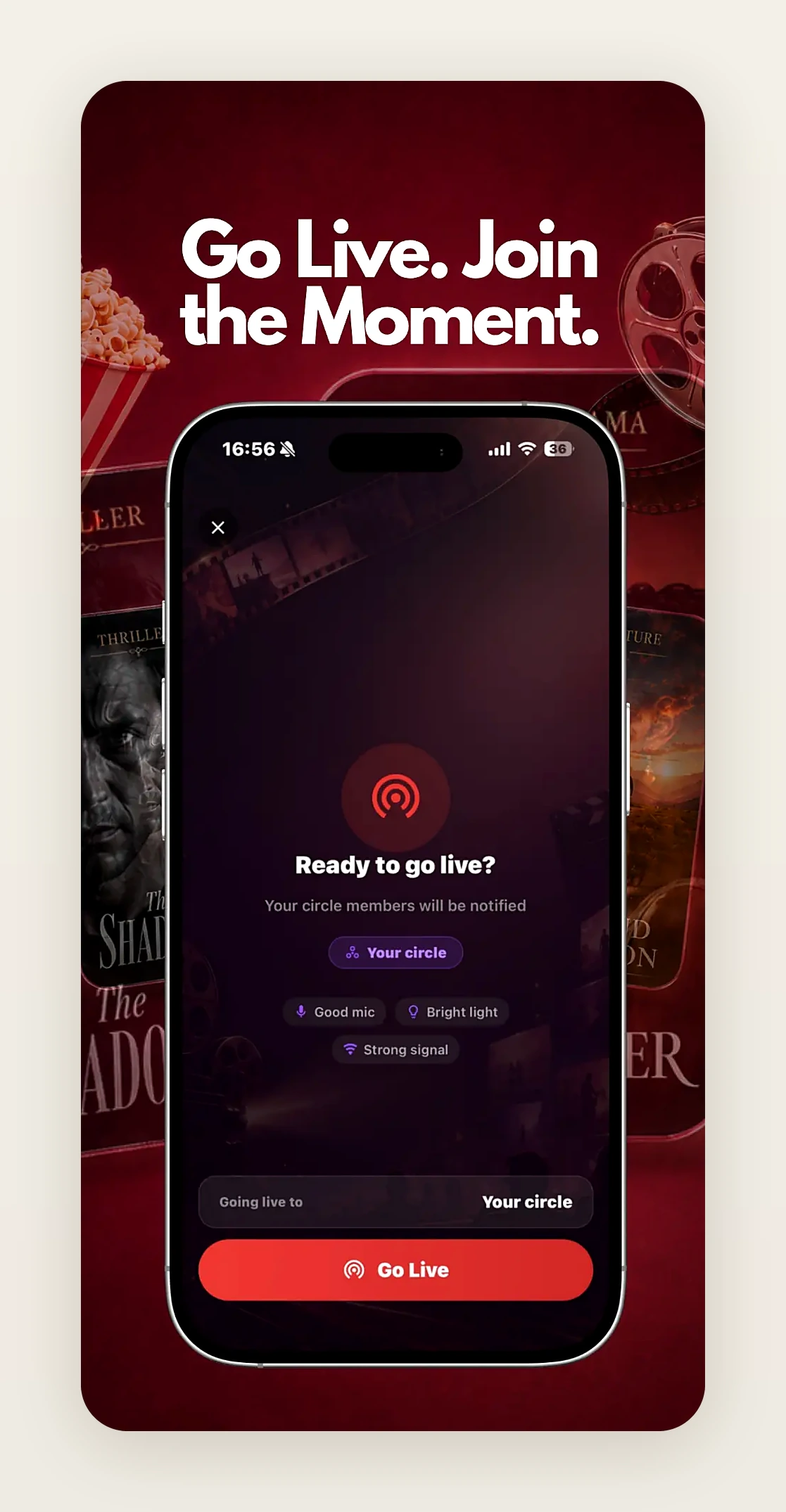
01 — Go live
Ready to go live?
Pre-flight checks before the stream starts.
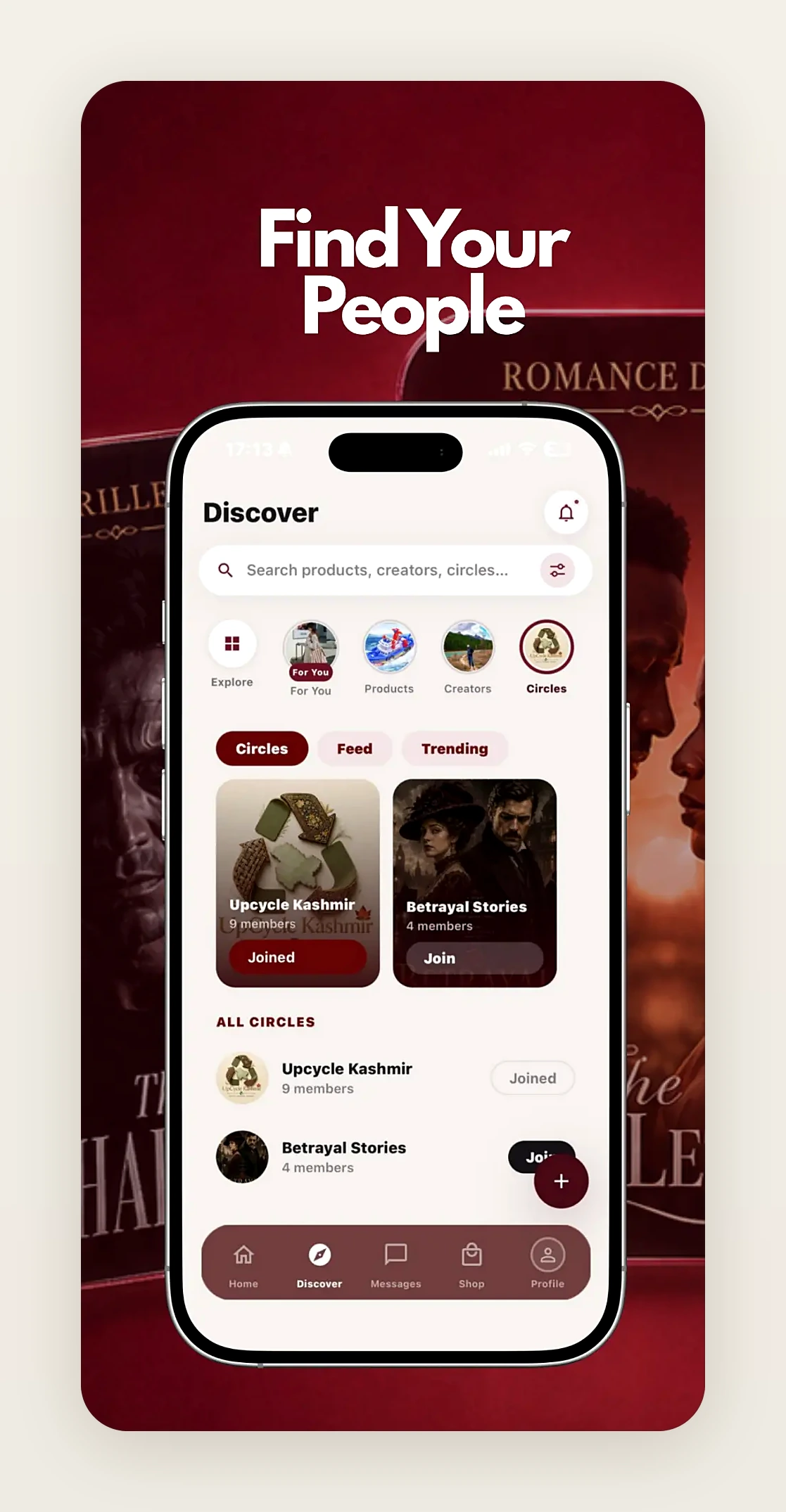
02 — Discover
Find your people
Circles, feed and trending in one search surface.
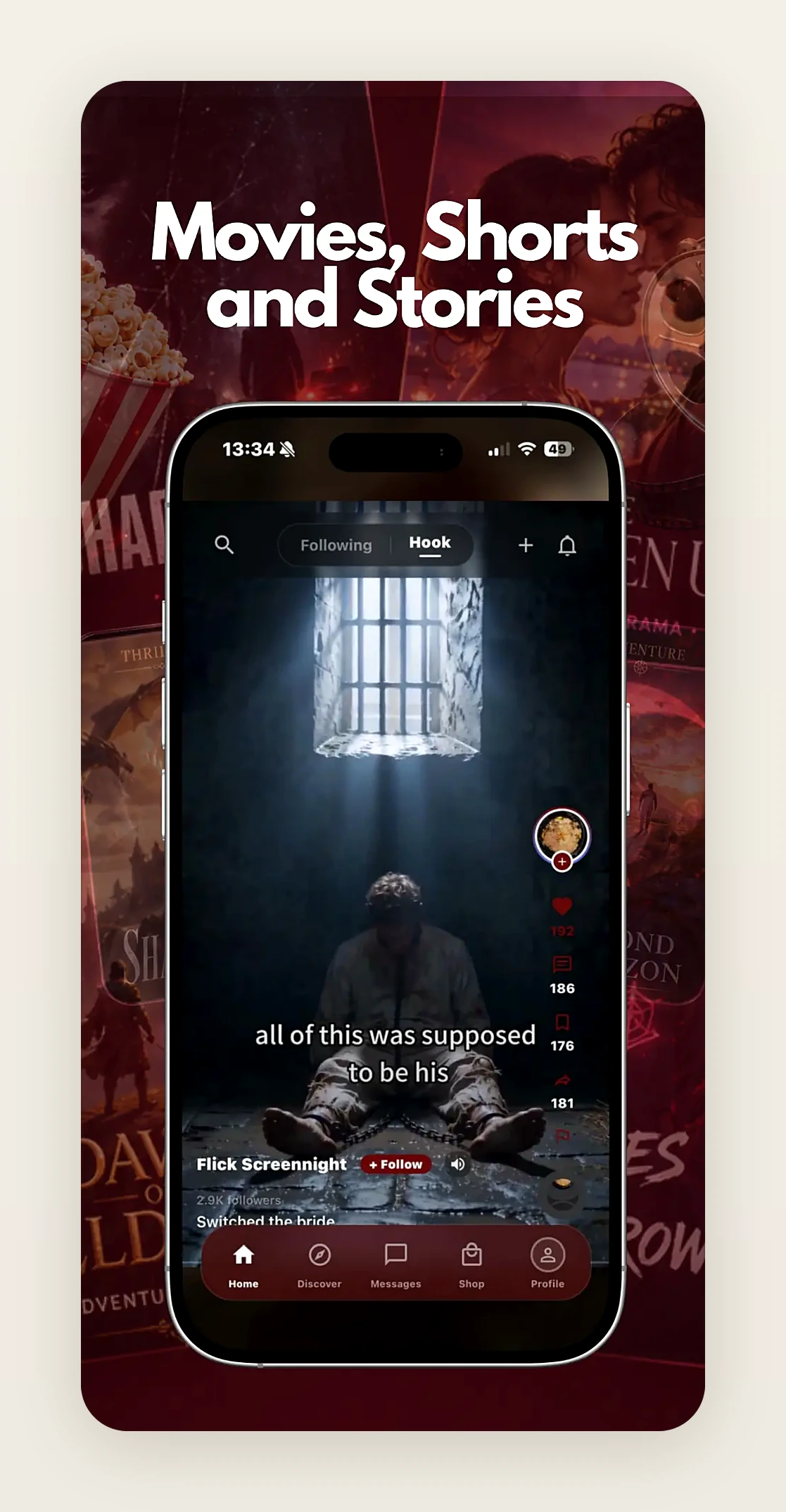
03 — Feed
Movies, shorts and stories
Full-bleed playback with reaction rail.
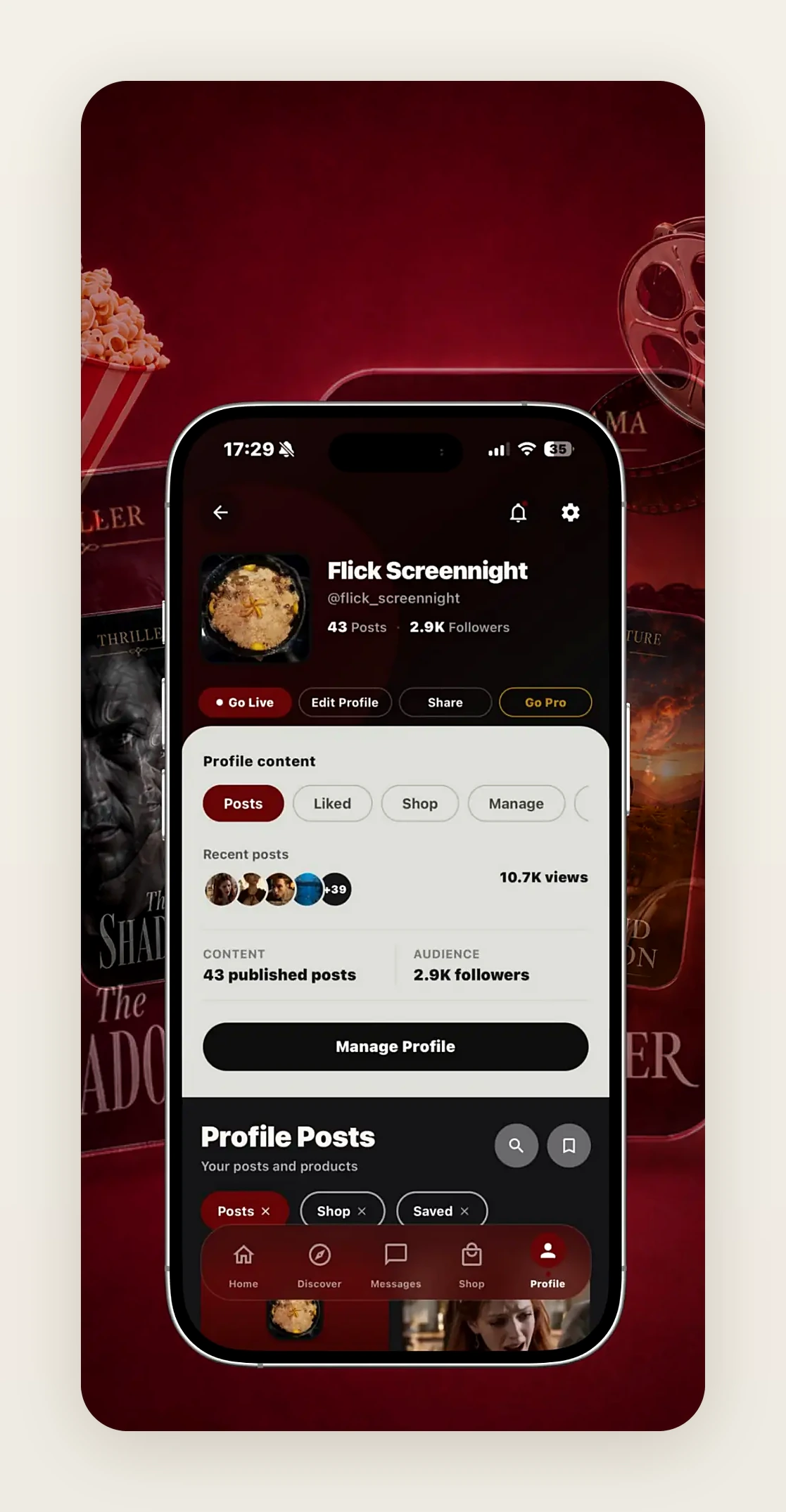
04 — Profile
Creator profile
Content, audience and management in one place.
03c — Interface studies
Mock screens, drawn to test decisions before they cost anything.
Before a screen is worth building, it is worth drawing. These studies test the parts that are expensive to get wrong: what a live surface owes the user while it is moving, how a permission is asked for, and how one navigation component behaves across three treatments.
Arriving in 3 min
S1 — Live surface
State first: what's moving, how long, in what order.
Turn on live location
So we can show what is actually moving near you — nothing else.
S2 — Permission
Ask once, say why, offer a real second option.
S3 — Navigation, three treatments
Same structure. The accent decides the mood.
Button
Chip
Toggle
Field
S4 — Component kit
Every state drawn, including the boring ones.
Live sessions
● streamingQueue
1.4k
concurrentS5 — Moderation control room
Safety work needs a surface too.
04 — Designing with constraints
Design decisions are technical decisions.
The pixels eventually have to become software.
Because I write the frontend, product intent, interaction detail and implementation cost get weighed at the same time. A transition that looks effortless in a design file can be expensive on a mid-range device with a live video session running. Knowing that early changes what gets specified in the first place — and removes a whole category of renegotiation later.
- Product intent
- Design detail
- Technical cost
- Decision
05 — Shipping
Eventually, someone has to press the button.
25
Product releases
100+
Frontend updates shipped
I work directly in React Native rather than handing designs to engineering and waiting. That means the release cadence is something I'm accountable for, not something I observe. Tago is live on the iOS App Store and Google Play; during MVP development I also built supporting infrastructure on Supabase, Cloudflare Workers and HTML/CSS.
06 — Leadership
Nobody builds a good product alone.
I supervised a team of 7 across product, design and engineering — writing the requirements, setting release milestones and keeping decisions consistent between what was specified, what was designed and what was actually built.
Good products are team sports.
07 — Iteration
The loop doesn't stop at launch.
- 01User feedback
- 02Behaviour
- 03Decision
- 04Design
- 05Build
- 06Release
- 07Learn
End-to-end ownership means post-launch is part of the job: watching what people actually do, deciding what that means, and putting the next version in front of them.